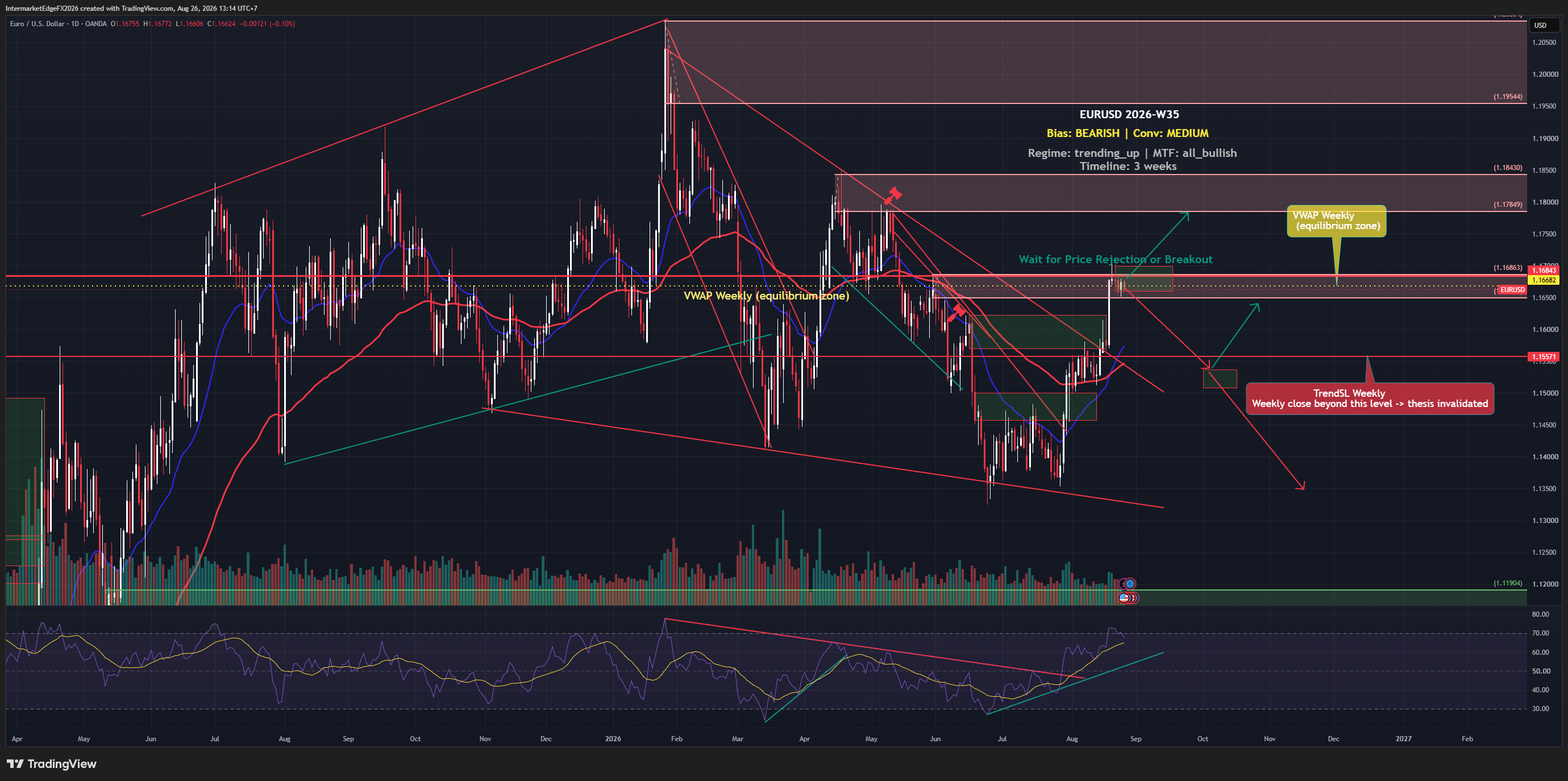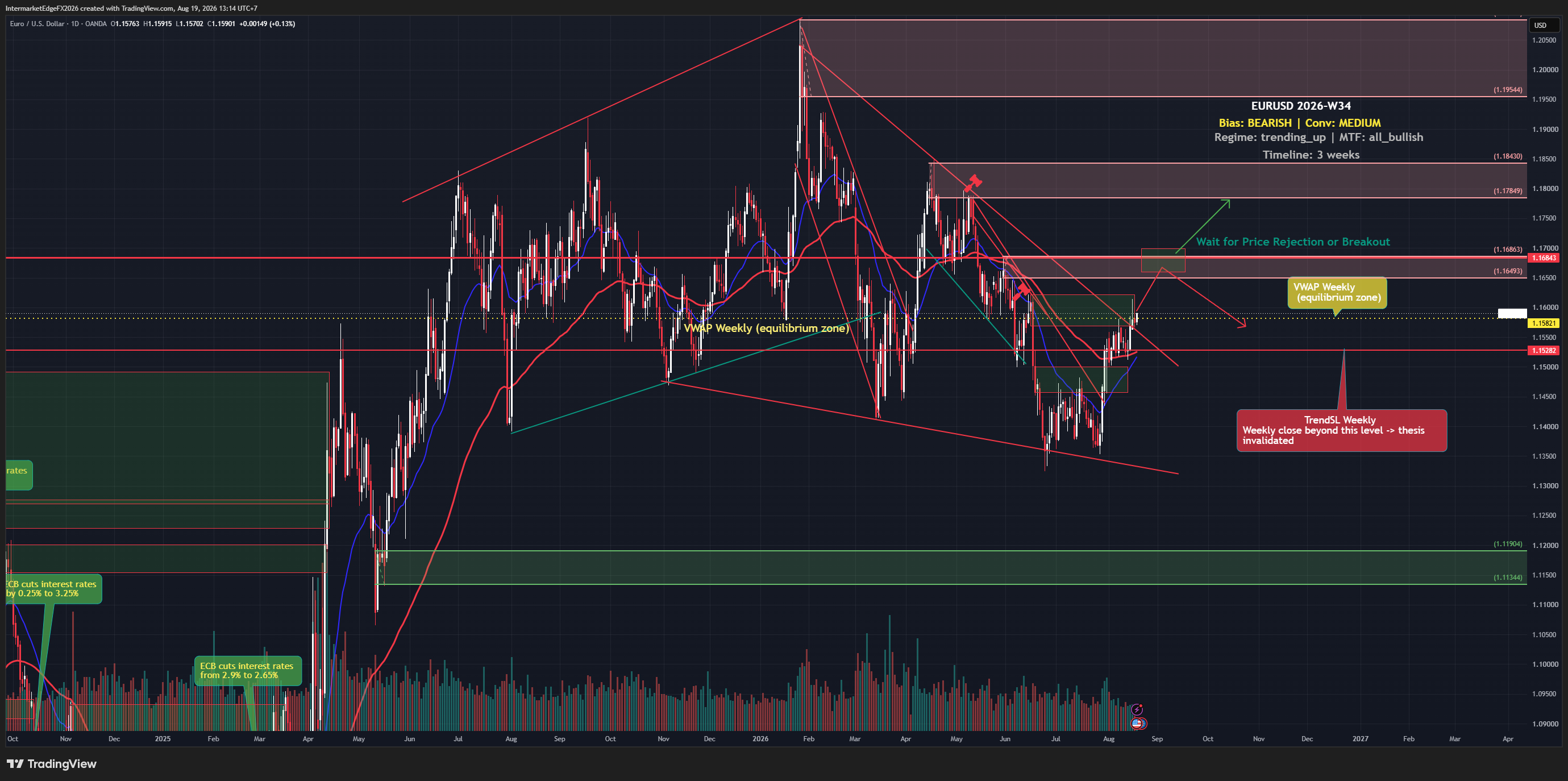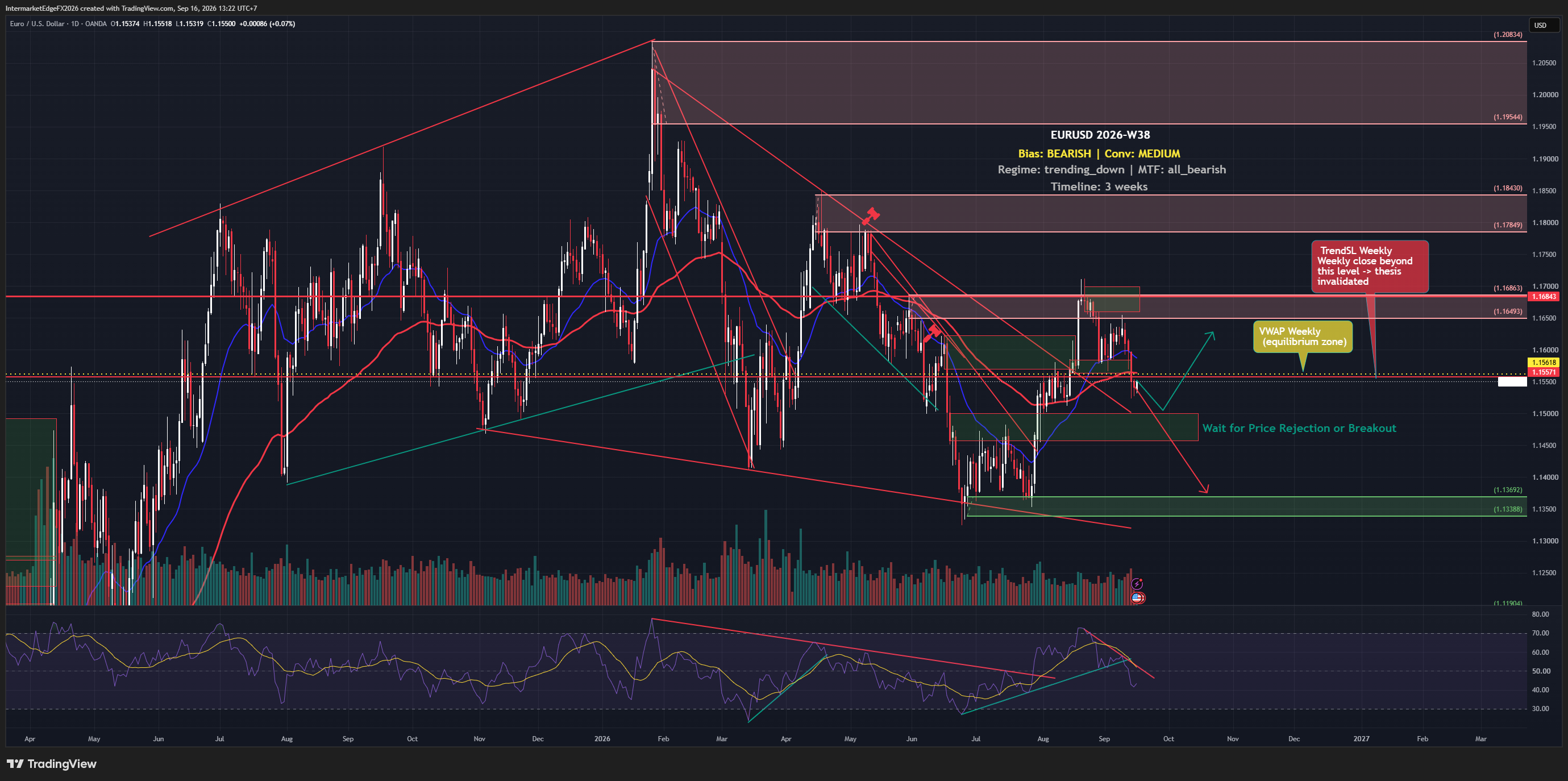
EURUSD Week W38-2026: Fed Pushes 10-Year Yields Toward 5%, But the Bearish Trade Is Harder to Execute Than It Looks
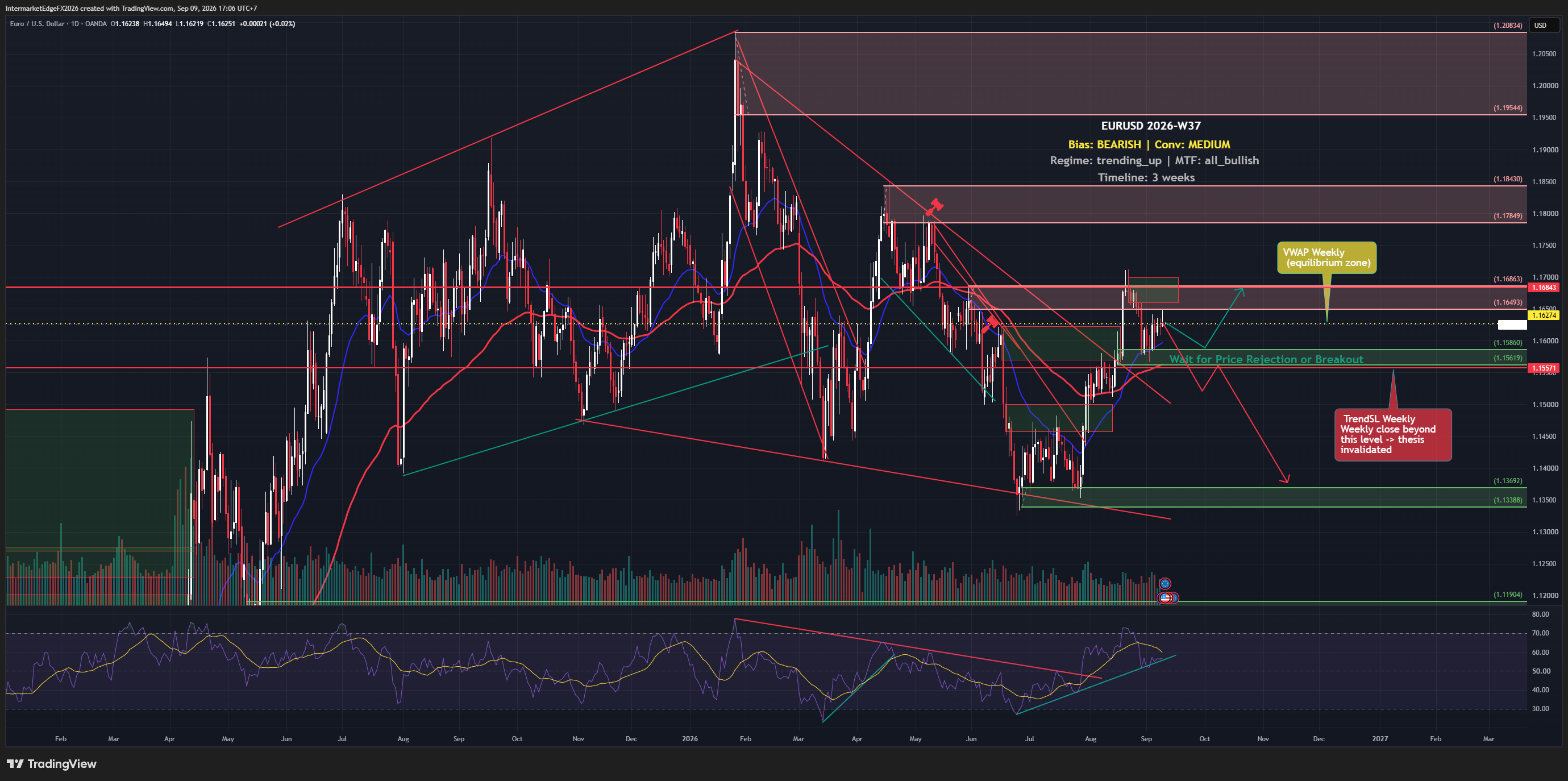
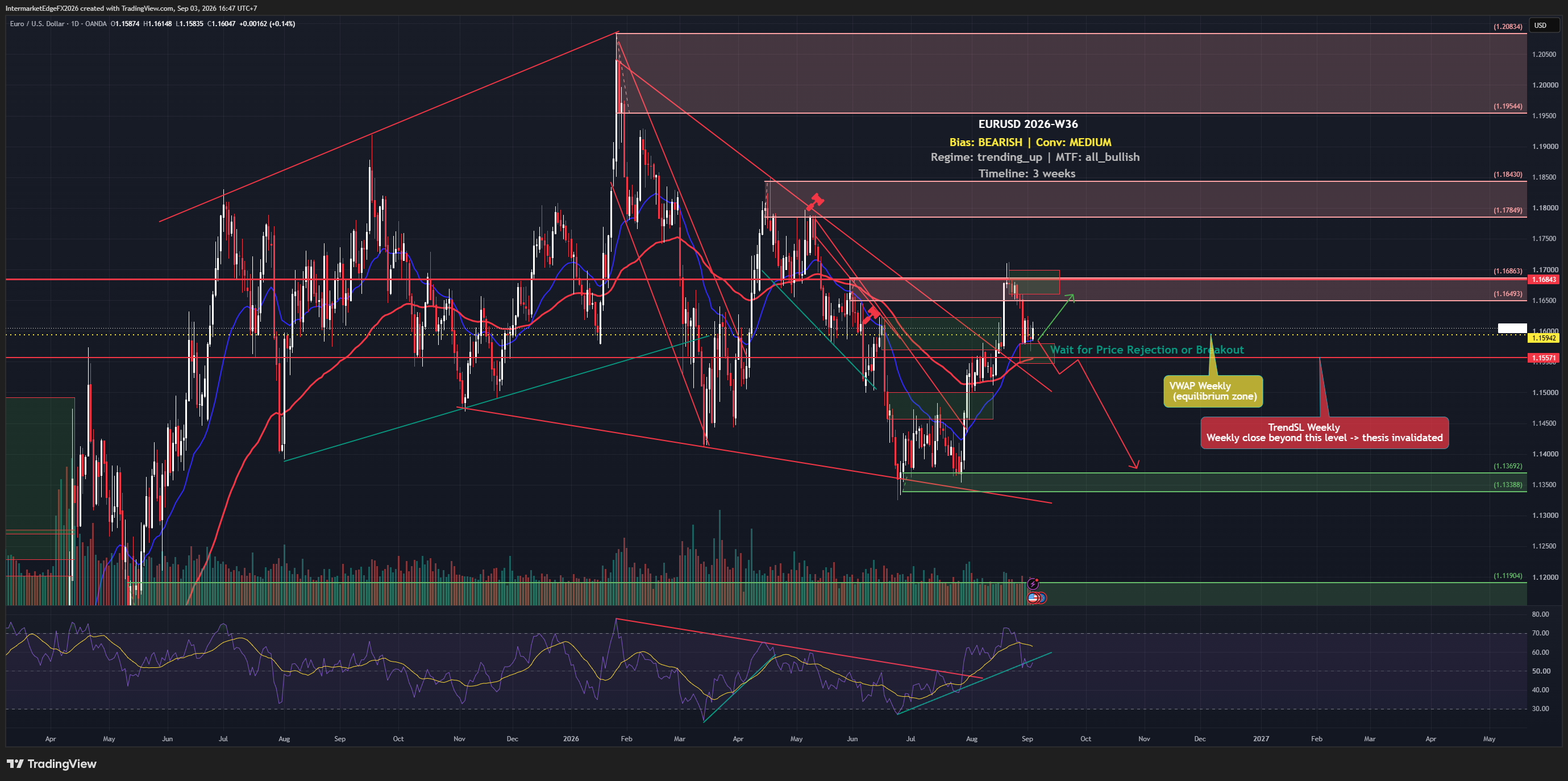
The ECB raised rates on September 10, and EURUSD is still trading near a one-month low. That disconnect is the story this week. With the US 10-year yield touching its highest level since 2007 and markets near-certain of another Fed hike on September 16, the rate differential, the yield gap that makes one currency more attractive to hold than the other, is doing the heavy lifting for the dollar. The euro got its hike; the dollar got the momentum. The bearish case for EURUSD this week rests on a clear causal chain: a Fed committed to higher-for-longer rates, rising real yields, and a rate differential that still favors the dollar over the euro even after the ECB's September 10 hike. That differential, measured not just by nominal policy rates but by the 2.6% real yield on US 10-year Treasuries, creates structural incentive to hold dollars, which means selling euros to fund that position. Every time that real yield anchors higher, the cost of being long EURUSD increases for an unhedged holder. What makes this week's setup genuinely uncertain, and why the conviction here is deliberate rather than high, is the conflict between the structural bearish overlay and several component-level signals that lean the other way. Price action itself has been constructive in recent sessions. COT positioning, non-commercial futures data showing which way large speculators are leaning, noting that the brief does not specify the exact report week or net-position figure, so this should be read as a directional lean rather than a precise statistic, shows a bullish tilt. And the macro component, somewhat counterintuitively, also scores bullish when isolated from the structural overlay. These three factors do not individually override the rate-differential thesis, but together they raise the cost of conviction. -- Intermarket Edge