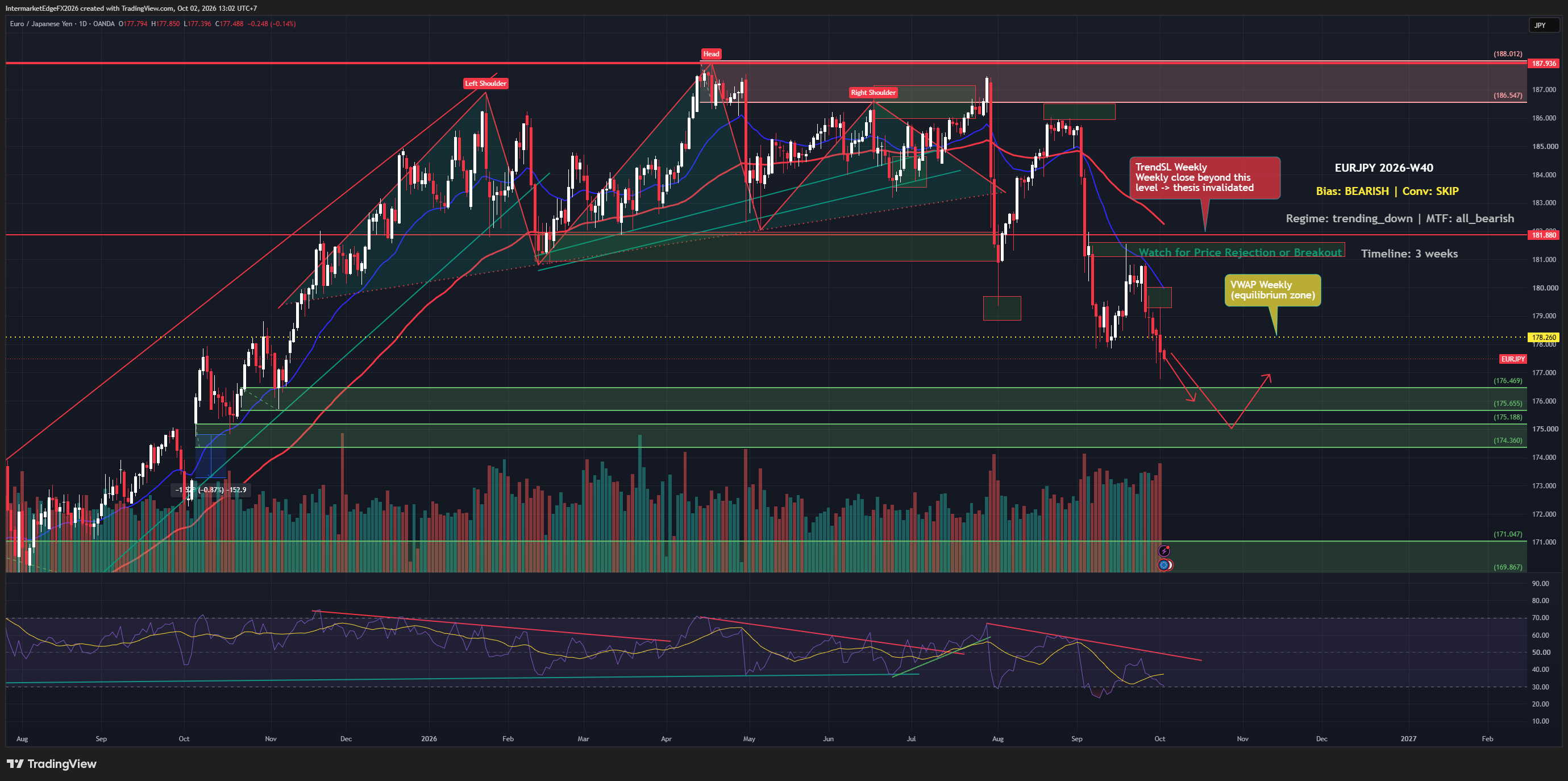
EURJPY W40: Hotter Tokyo Inflation Supports Yen, but Bears Still Lack Confirmation
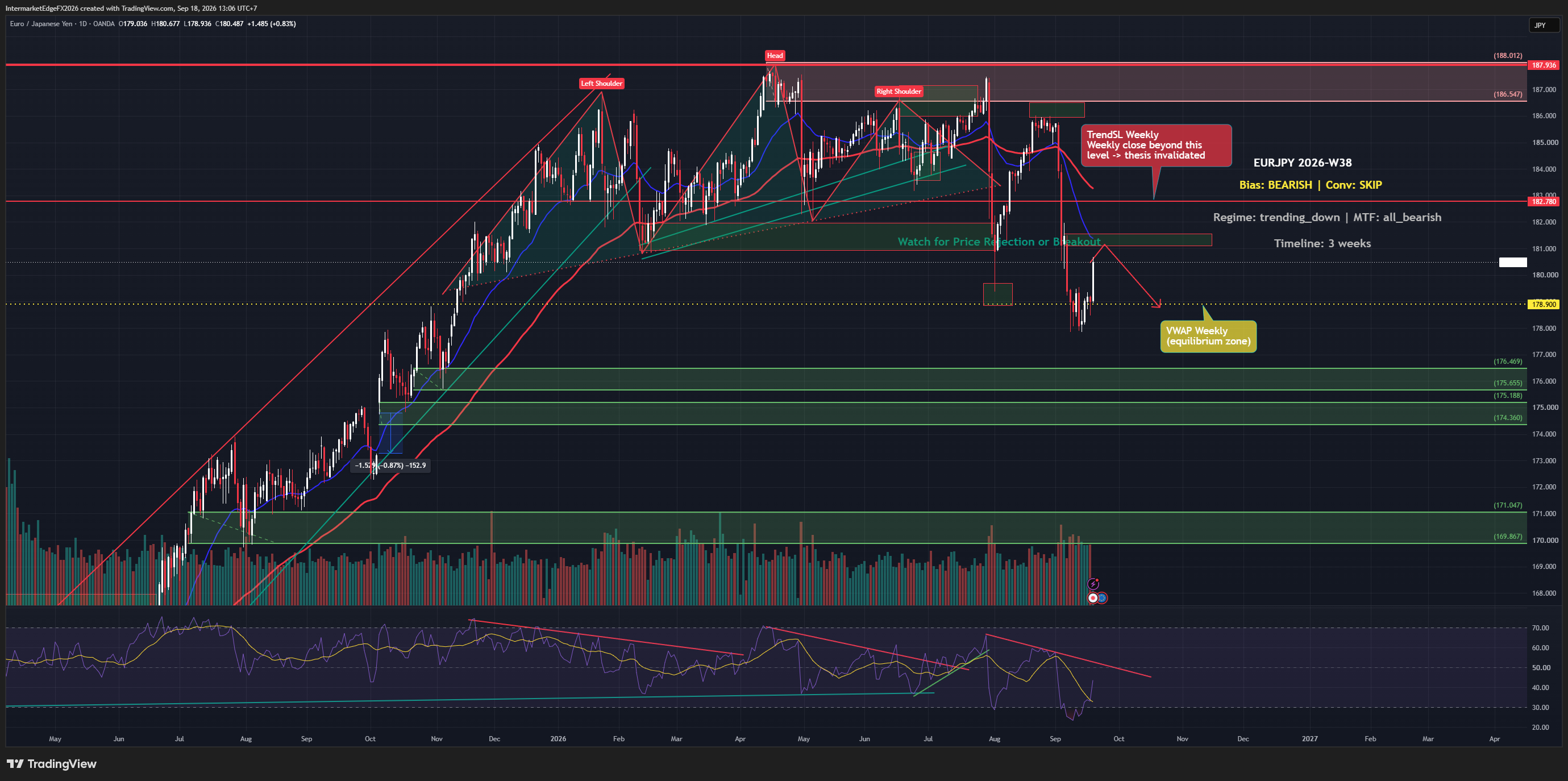
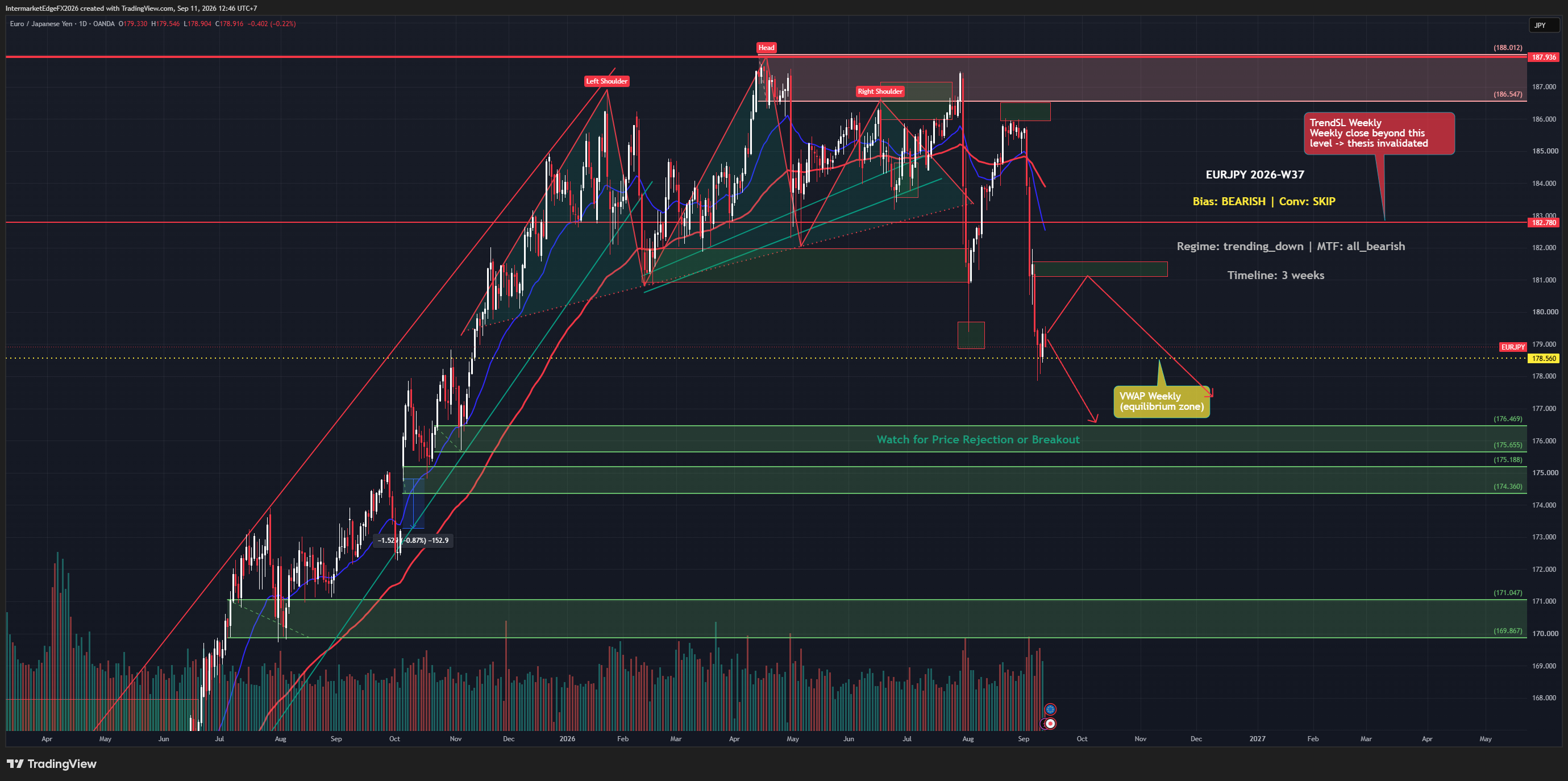
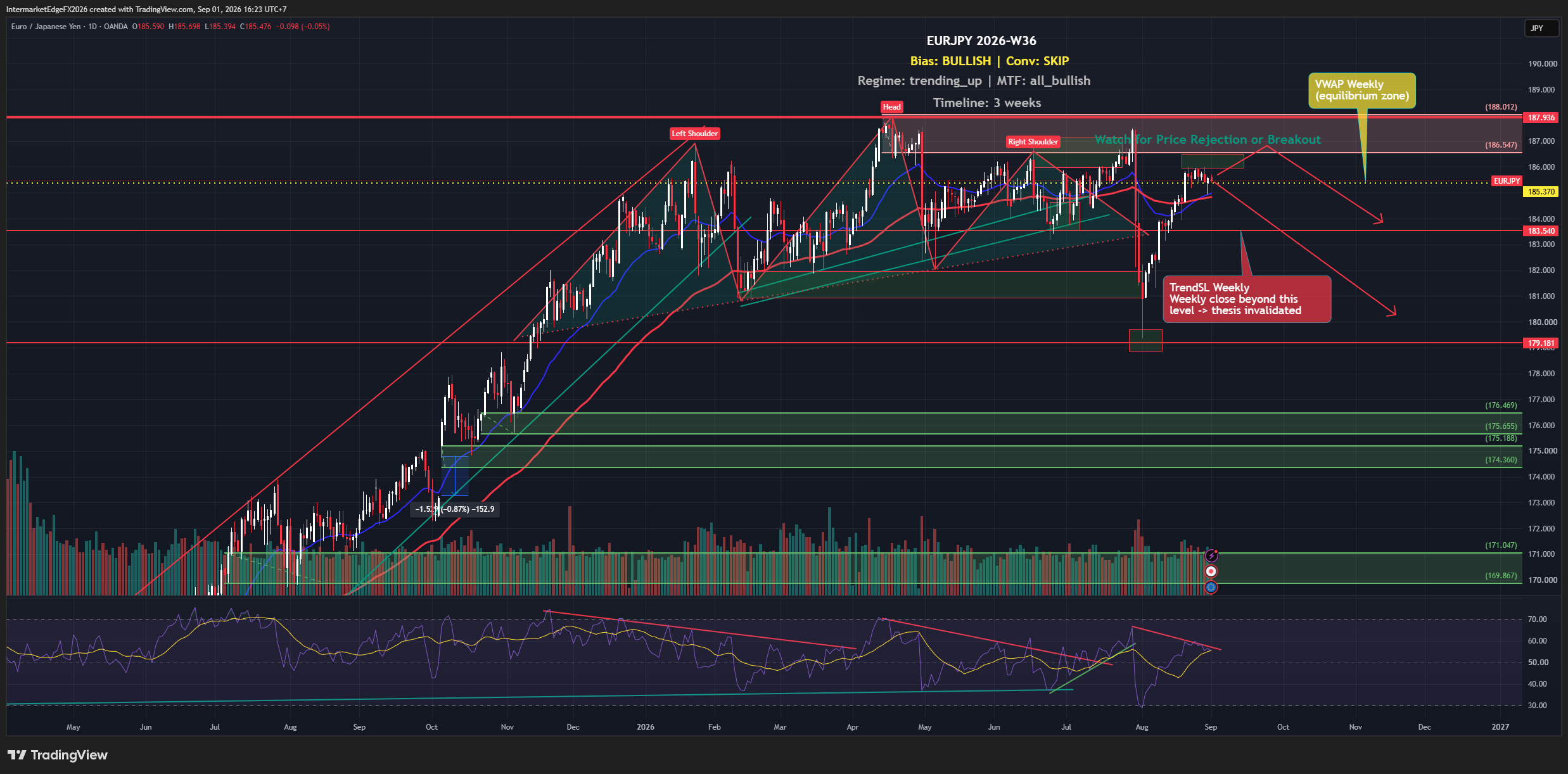
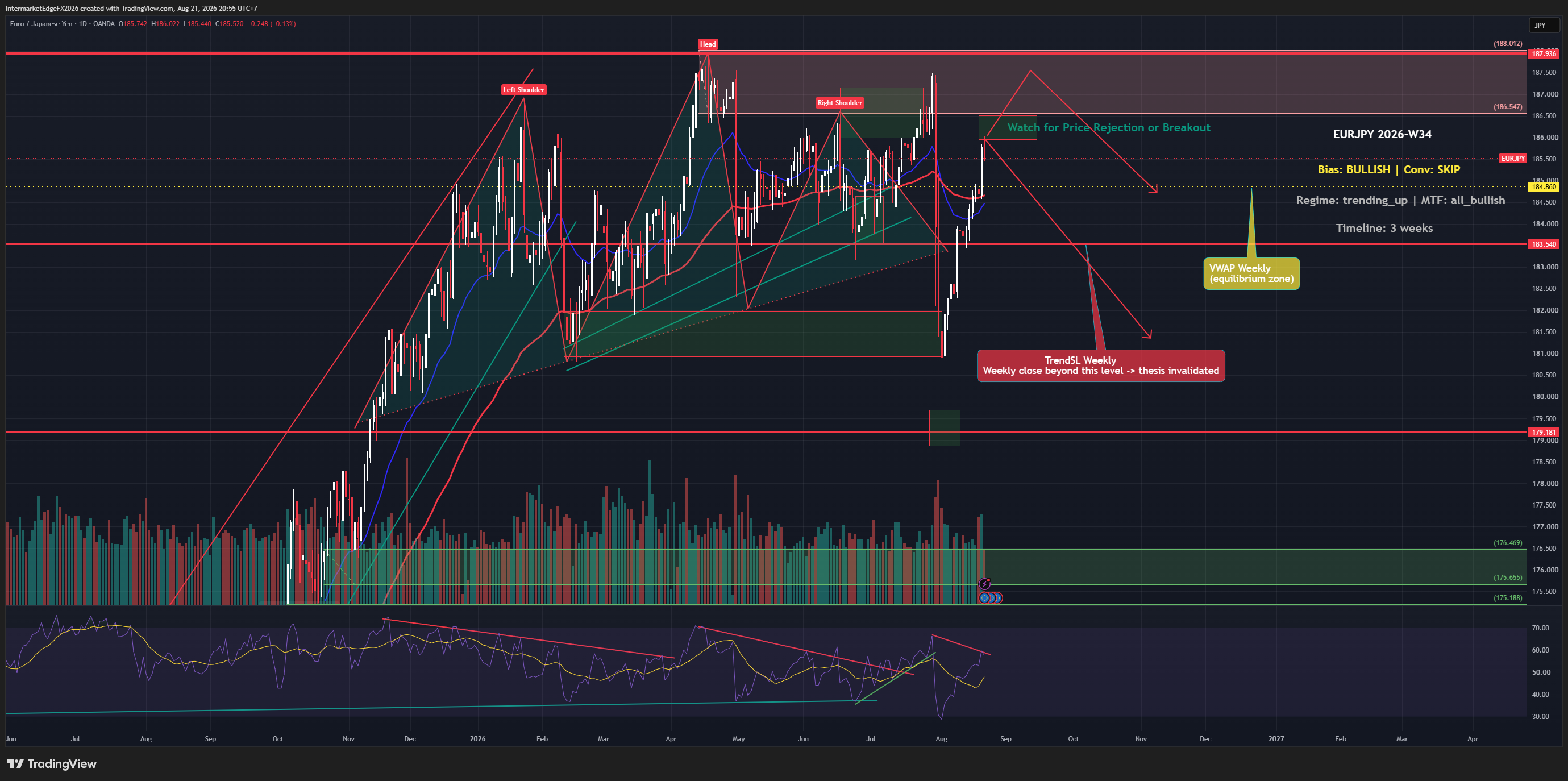
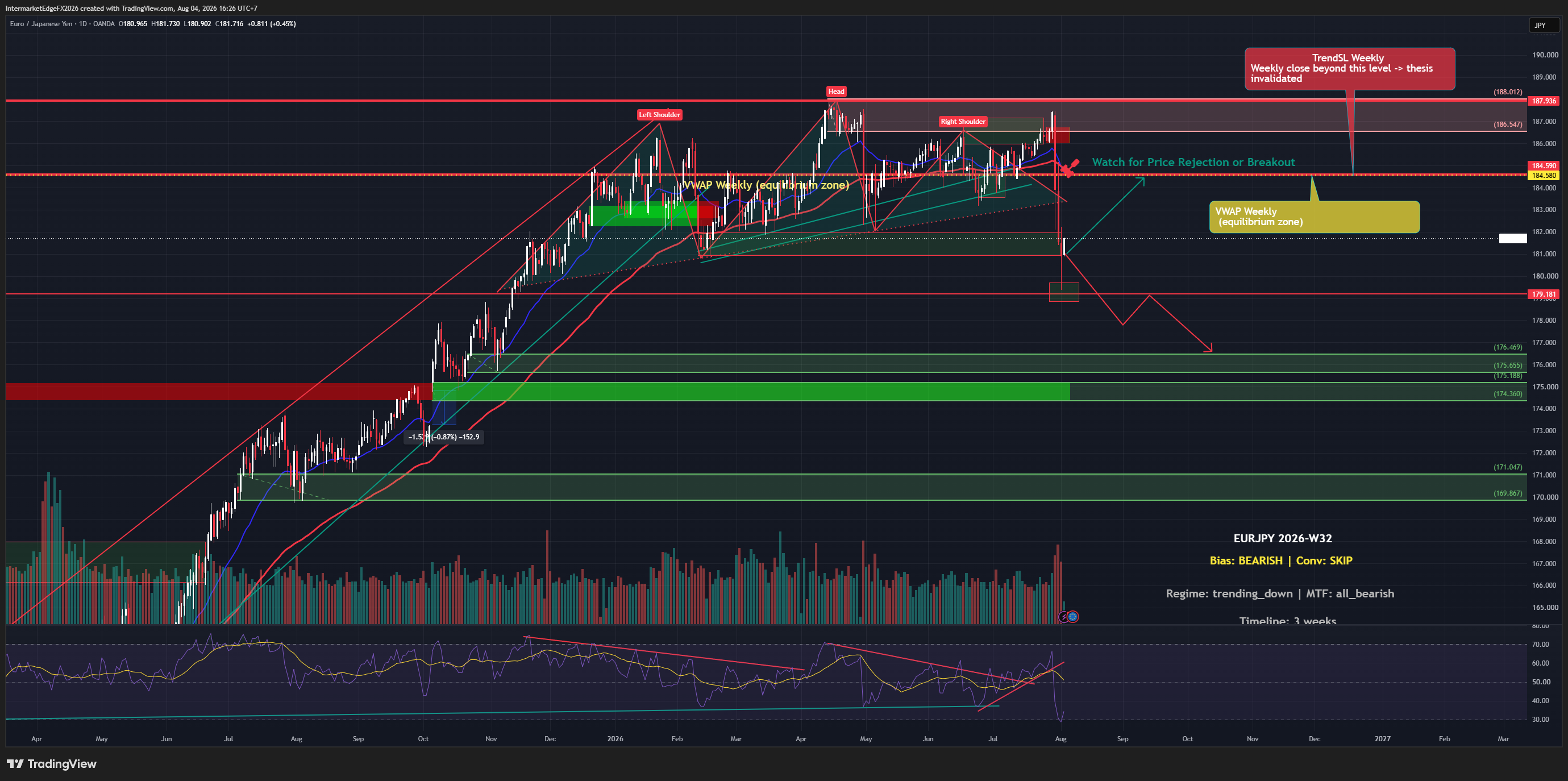
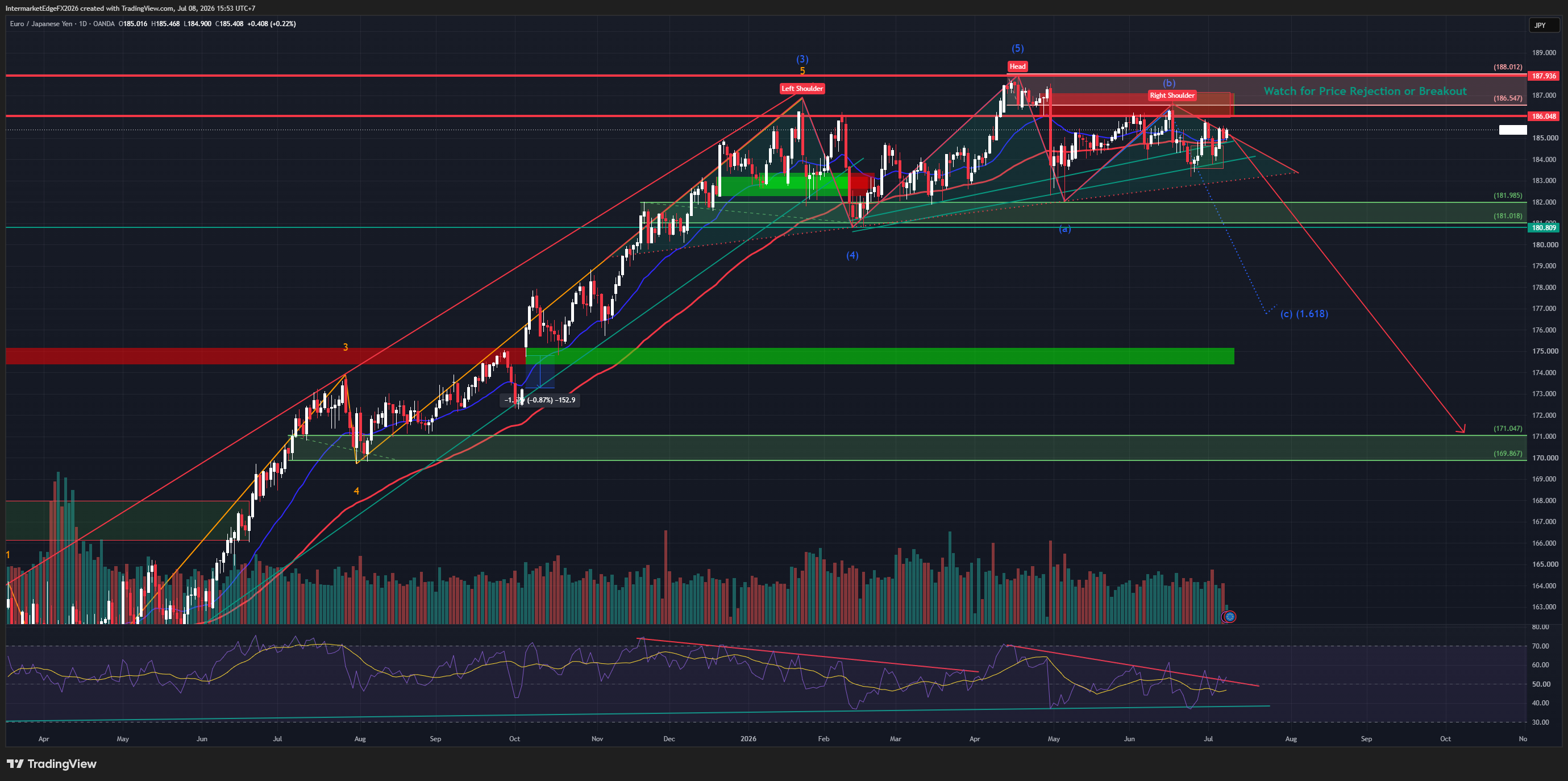
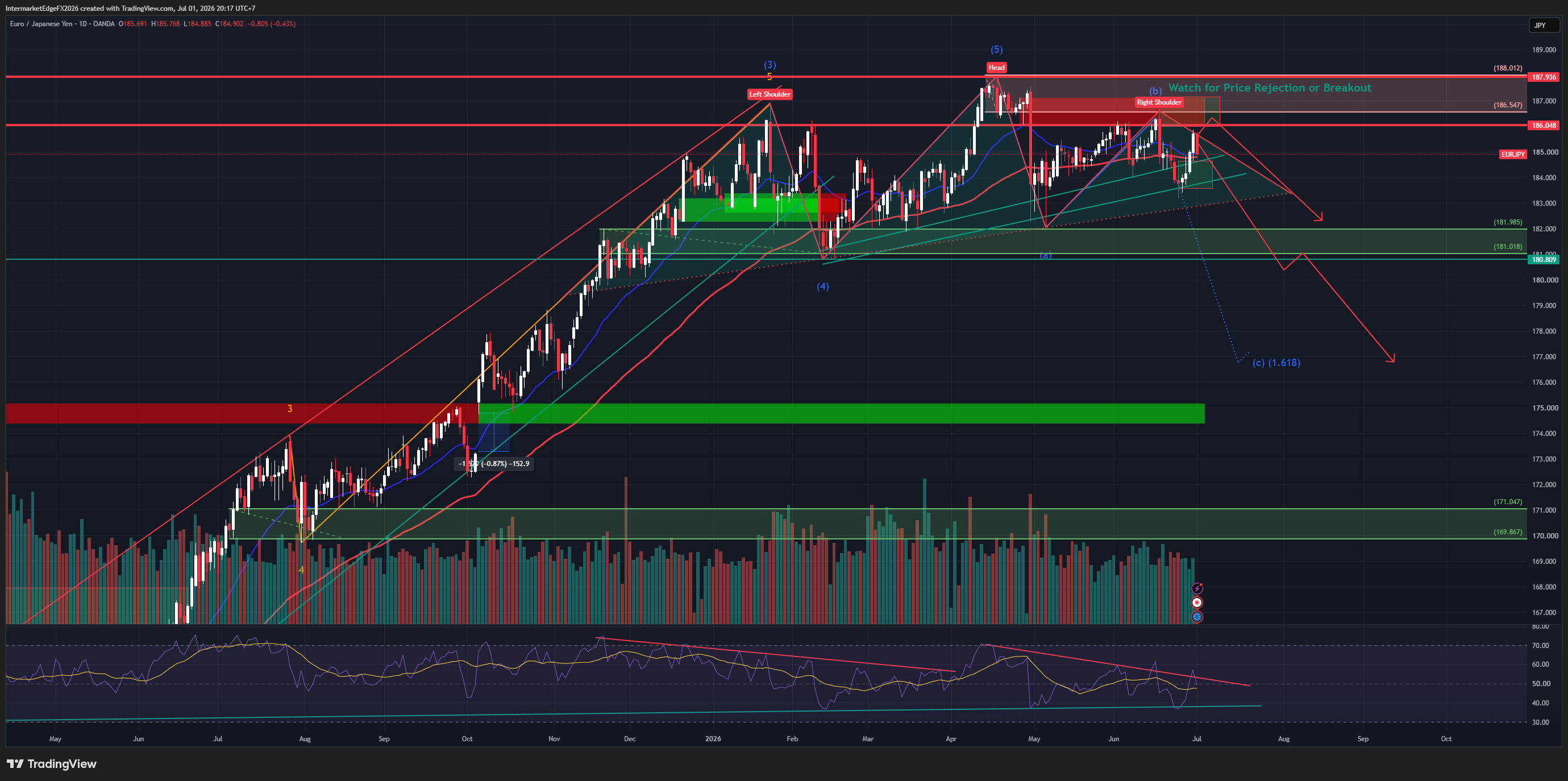
Japan's September Tokyo core-core CPI just printed 3.0% year-on-year against a 2.4% forecast, a significant beat that strengthens the case for BOJ policy tightening and yen appreciation. EURJPY is sitting at 177.59 early Friday, below the weekly VWAP at 178.26, with all timeframes aligned bearishly. The directional case looks clean. The conviction, however, does not, and that gap between direction and certainty is exactly where traders get hurt. The directional lean for EURJPY over the next three weeks is bearish, driven by two converging forces: a BOJ that is being pushed toward further tightening by inflation data that keeps exceeding expectations, and a euro that Reuters described as lagging the dollar during September. When the yen strengthens and the euro weakens simultaneously, EURJPY gets hit from both sides, the numerator falls and the denominator rises. That is the structural setup here. However, the analytical framework is deliberately standing aside rather than treating this as an actionable bearish entry. The reason is a direct conflict between the macro and technical signals: while the regime reads trending-down and all timeframes align bearishly, raw price action is generating a bullish technical signal that cannot be dismissed. This is not a minor discrepancy, it is an explicit disagreement between two evidence streams that normally need to be in agreement before sizing a position. Layered on top of this, the structural longer-term bias for EURJPY remains bullish, meaning that any short positioning is trading against the underlying trend. The retail crowd is 60% net long the pair as of October 2, which provides a contrarian lean toward the bear case, when the crowd is wrong, it tends to be wrong in the direction they are positioned, but this reading alone is not enough to override the technical conflict. -- Intermarket Edge