Macro Regime — InterMarketEdge

Macro Regime

Regime-level analysis — stagflation, Fed policy shifts, and structural macro drivers moving markets

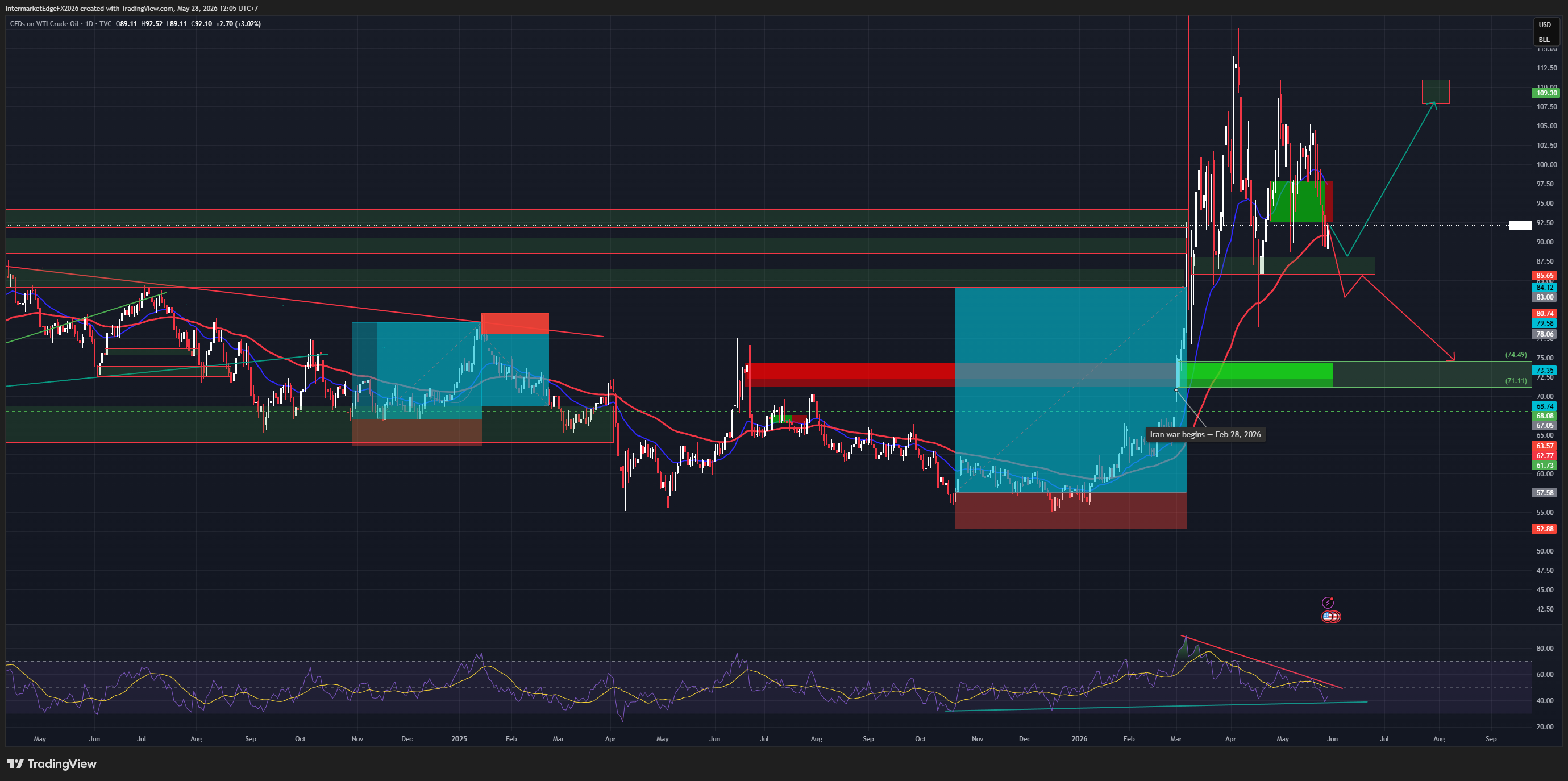
USOIL: Iran Deal Decompression Meets OPEC+ Supply Unlock - EIA Crude Draw of 7.9M bbl Confirms: Today's Bounce Is Fundamental

USOIL: Iran Deal Decompression Meets OPEC+ Supply Unlock - EIA Crude Draw of 7.9M bbl Confirms: Today's Bounce Is Fundamental

WTI is up 3% today. The reason is not what you think. Everyone is calling it a "deal waver" bounce. They are partially right. But there is a more important number underneath that headline. EIA crude draw: -7.9M bbl. Week ending May 15. That is not a technical bounce. That is demand outpacing supply by a significant margin even as Iran deal decompression has been pulling prices lower for 10 straight days. Here is what that number means in context: Brent fell from $111.27 on May 18 to $93.23 yesterday. That is $18.04 in 9 days - the market was aggressively pricing a deal. But demand never blinked. Commercial crude stocks at 445.0M bbl, down from 452.9M. Gasoline also drew down 1.5M bbl. Consumer demand intact. This changes the bear thesis. Not the direction - still bearish toward $74-71 when the deal materializes. But the timeline. Strong demand means WTI will not collapse in one day after a deal signing. The $88-92 demand zone is a real floor, not just a technical level. The battle for Q2-Q3 2026 oil price is now clear: Bear side: Iran deal + OPEC+ adding +411kbpd from June = double supply pressure Bull side: EIA draws showing demand running well above pre-war equilibrium Neither side wins cleanly. Which is why WTI oscillates rather than trends. The one level that matters above everything else: $88. Hold above it and the bounce targets $97-100. Break below it - which requires both a large EIA build AND confirmed deal progress - and $74.49 is next. Tonight at 23:30 GMT+7, EIA releases week ending May 22 data. That is the tell. Large draw again = demand floor is structural = bounce is real. Large build = prior week was seasonal = bear resumes. This is the anchor instrument for the entire macro series this week. Oil is not a consequence of the macro regime. Oil is the cause. Conviction: Medium-High bounce near-term. Medium bear medium-term. #USOIL #WTI #CrudeOil #IranDeal #EIAInventory #OilPrice #MacroAnalysis #OPEC #Stagflation #IntermarketAnalysis

AUDUSD | May 22, 2026 The Commodity Currency That Lost Its Commodity Story

AUDUSD | May 22, 2026 The Commodity Currency That Lost Its Commodity Story

**AUDUSD | May 22, 2026** AUDUSD is trading at 0.7143. That number looks stable. It is not. Three structural forces are converging simultaneously against the Australian dollar, and the catalyst that ties them together arrived on Wednesday when the ABS released April labor force data. Australia's unemployment rate rose to 4.5% - the highest since November 2021. Employment fell by 18,600, the first contraction in five months, against expectations of a 17,500 gain. The participation rate declined. The underemployment rate ticked higher. Every measure of labor market health deteriorated simultaneously. The market partially priced it: AUDUSD dipped to 0.7106 on the release before recovering to 0.7143 on Iran deal optimism. That recovery is borrowed time, not structural support. The unemployment shock matters because it changes the RBA calculus. Before Wednesday, the RBA was "Hold 4.10%, watching CPI." After Wednesday, the labor market is cooling faster than expected, unemployment is approaching the RBA's own NAIRU estimate of 4.5-5.0%, and the case for rate cuts is building. A cutting RBA versus a holding-or-hiking Fed is a structural AUD-negative that plays out over months, not sessions. The second force is the commodity premium compression. AUD rode the Iran war commodity shock higher, but the RBA's own May Statement acknowledges this boost is short-lived with few lasting implications for Australian mining. Brent has now fallen from $111.27 at the start of this week's analysis series to $104.62 today. The terms-of-trade tailwind is fading. The third force is AUD's high risk-sentiment beta. VIX at 16.76 and equities at new week-highs are providing a temporary floor. When that floor is removed - whether by an Iran deal collapse, a China disappointment, or an EIA inventory build - AUD reprices fast. Key levels: 0.7276-0.7200 resistance, 0.6938-0.6879 near-term target, 0.6491-0.6438 structural floor if both commodity and RBA premium exit simultaneously. Conviction:

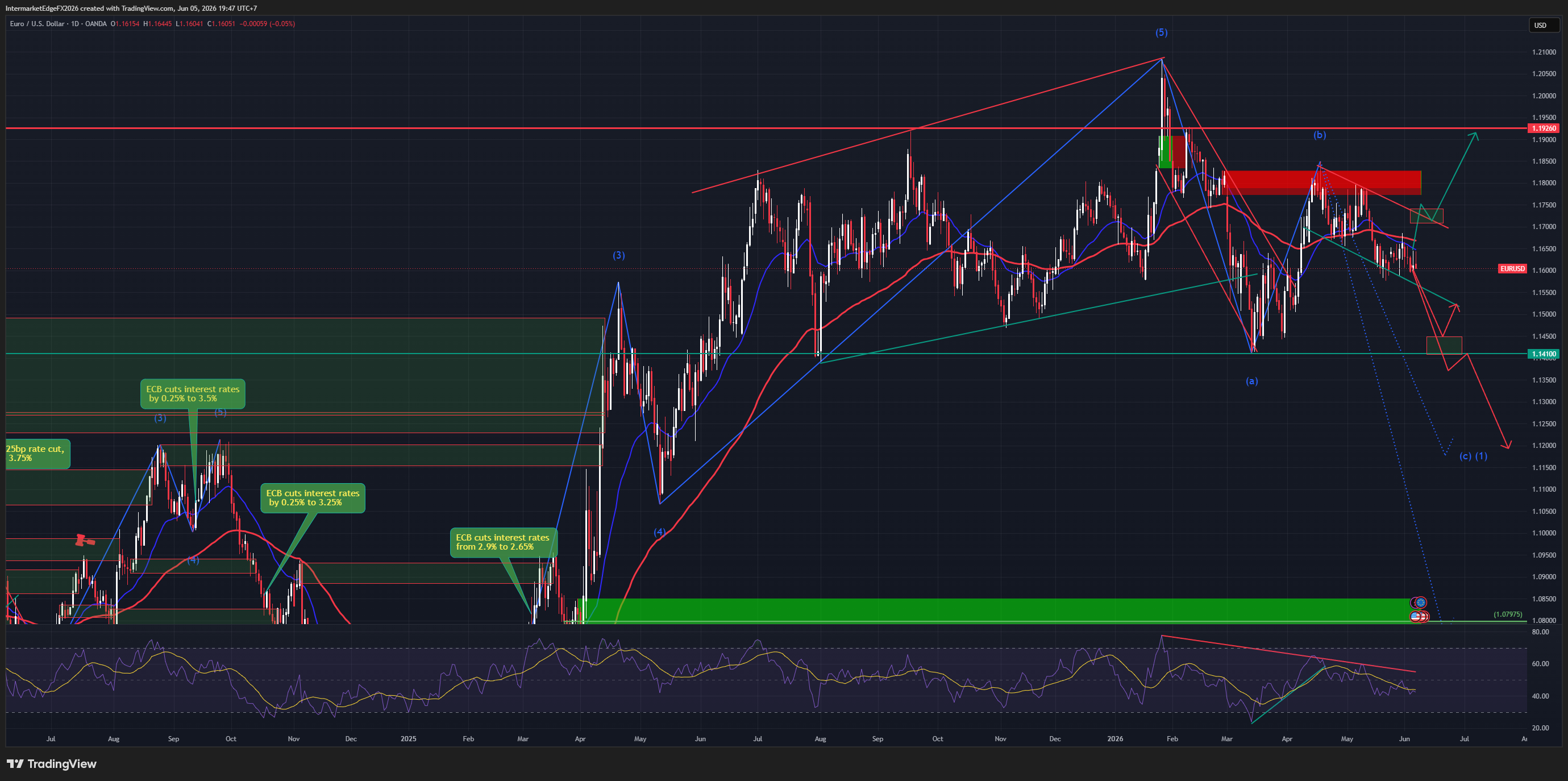
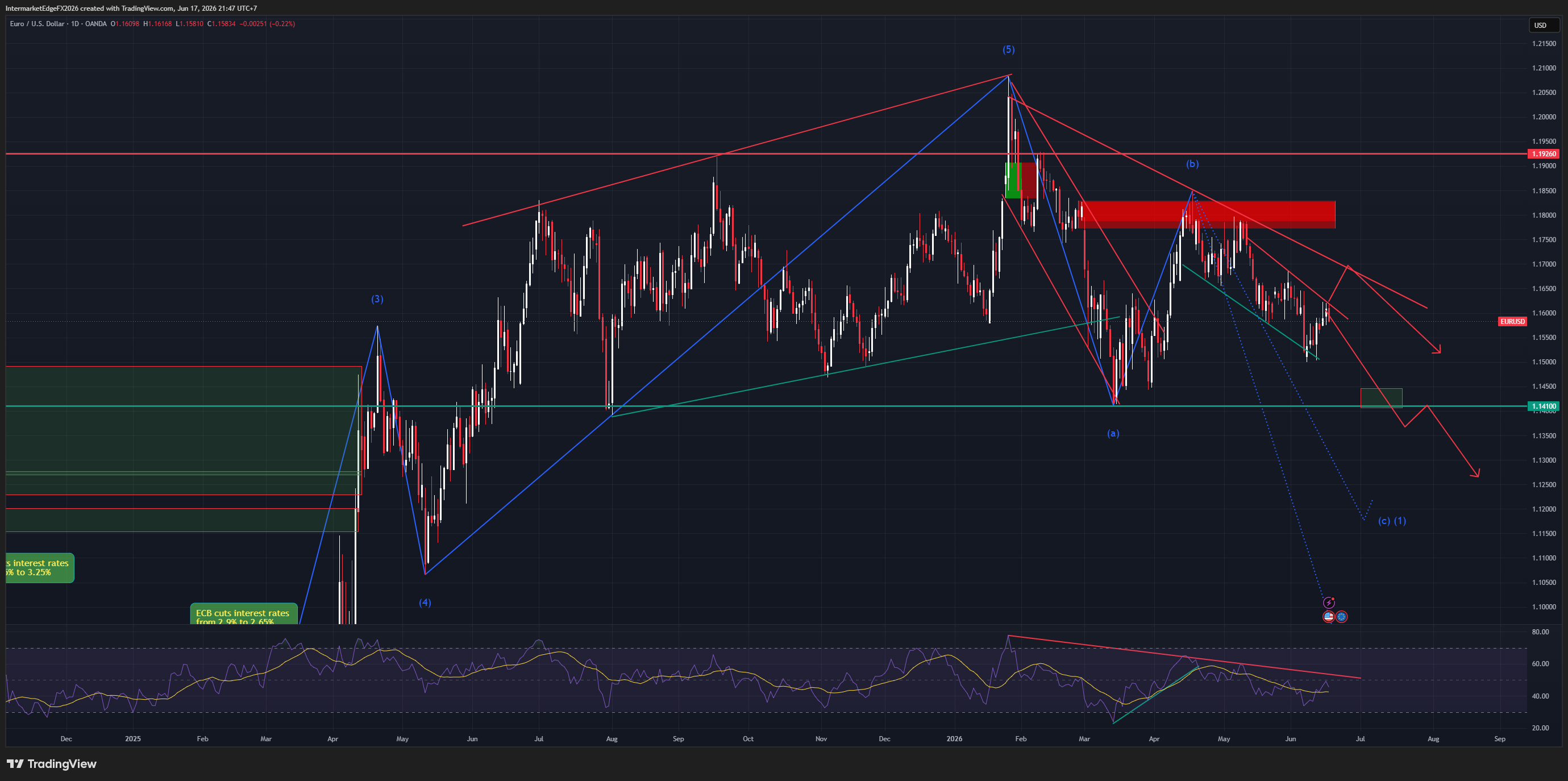
EURUSD | May 19, 2026 The Euro at 1.1621 - Holding Above 1.14 While the World Reprices the Dollar

EURUSD | May 19, 2026 The Euro at 1.1621 - Holding Above 1.14 While the World Reprices the Dollar

**EURUSD | May 19, 2026** EURUSD is trading at 1.1621 tonight. By every classical measure, it should not be here. The ECB is in a cutting cycle with the deposit rate at 2.50%. Eurozone CPI is at 2.2%. The DE-US 10Y yield spread is -163 basis points - one of the widest structural disadvantages for EUR in over a decade. Every rate differential model says EURUSD should be closer to 1.08-1.10. The fact that it is trading 600 pips above that range is the most important macro signal in FX right now. Something structural has changed. Global central banks and sovereign wealth funds - particularly from the Middle East, Asia, and emerging markets - have been systematically reducing USD exposure since the SWIFT exclusion of Russia in 2022. The Iran war shock of February 2026 accelerated that process. EUR is the deepest and most liquid alternative to USD in global reserve portfolios, and it is absorbing a structural bid that has nothing to do with ECB versus Fed policy. This is the regime that explains the anomaly. De-dollarization flows are non-price-sensitive and do not stop for weekly data releases. They provide a persistent floor under EUR demand that the standard interest rate model cannot see. Two additional forces are reinforcing this bid: Warsh uncertainty - the new Fed Chair has zero established reaction function, keeping institutional dollar positioning tentative - and Brent crude above $110, which signals the Hormuz premium is still active and the geopolitical urgency driving reserve reallocation has not eased. The near-term structure is consolidation between 1.14 and 1.19. No collapse without a hawkish Warsh shock or genuine Hormuz resolution. No breakout above 1.19 without US data deterioration or further geopolitical escalation. Watch Brent and EURGBP daily - they tell you whether the regime is intact before EURUSD price does.

Stay in the loop

Get notified about new research, macro insights, and market analysis.

InterMarketEdge

© 2026 InterMarketEdge. Financial intelligence for inter-market traders.