GBPUSD Week W34-2026: Pound Climbs Toward $1.36 as UK Inflation Test Looms, but Crowded Longs Warn of a Trap
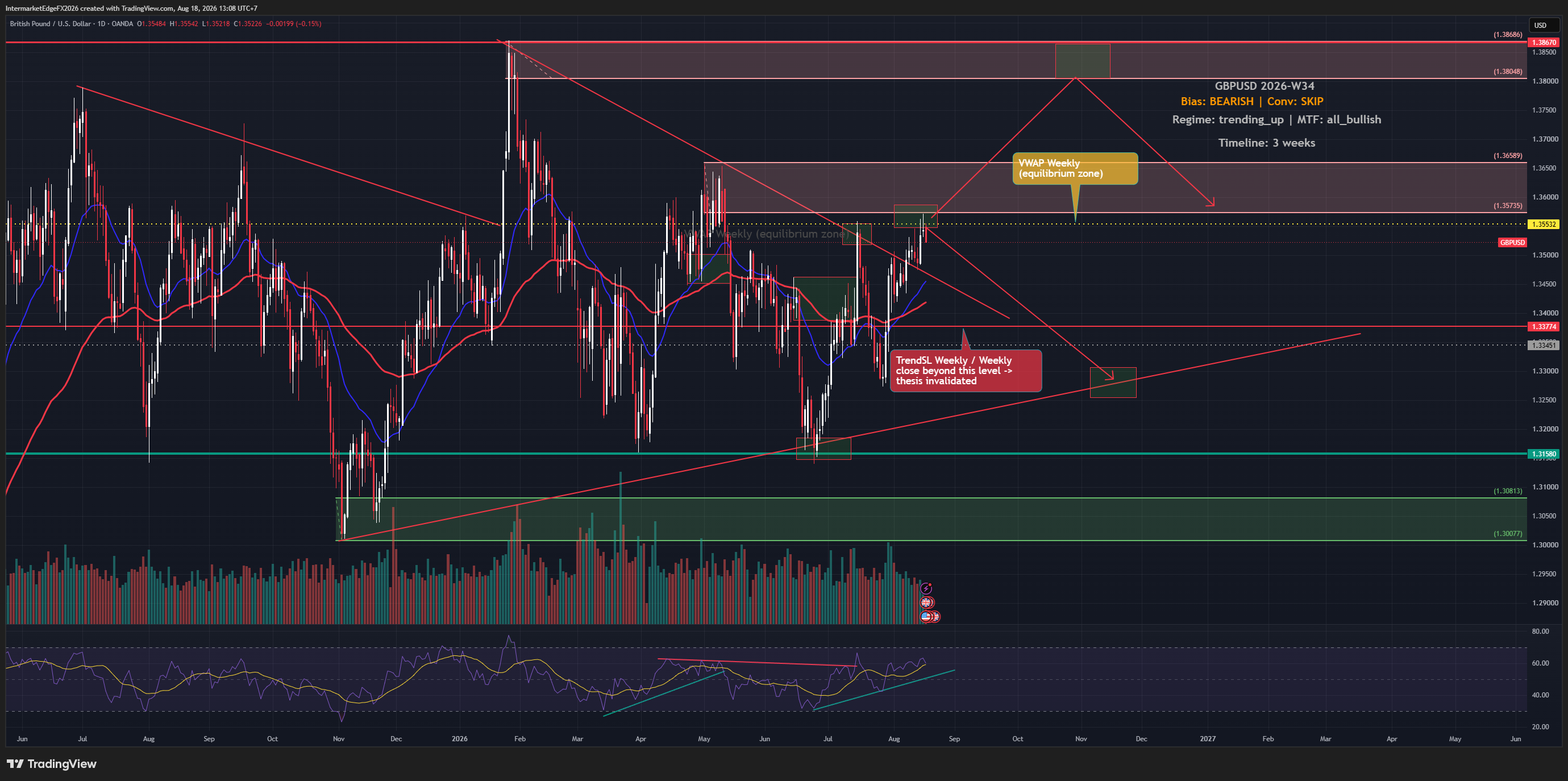
GBPUSD is trading at 1.35421 as of Tuesday, 18 August 2026, 06:14 UTC, trading below the weekly VWAP at 1.35532 while remaining above weekly TrendSL at 1.33774. The broader technical structure remains bullish, but price has lost the weekly VWAP in the short term. The available COT summary points to crowded long positioning, but it lacks the report week, release date, and exact net-position figure. Treat it as a directional risk flag, not standalone proof. The macro headwind from Fed real yields at 2.39% hasn't gone away. The framework carries a bearish bias on GBPUSD for the next three weeks, but the evidence supporting that bearish label is not currently strong enough to act on, and that distinction matters enormously. The primary bearish driver is the BOE-versus-Fed rate differential, where rising US real yields at 2.39% create structural pressure on GBPUSD by making dollar-denominated assets more attractive on a return-adjusted basis. A hawkish Fed, one that keeps real yields elevated even as nominal rate hike bets fluctuate, sustains that pressure without needing an outright rate increase. Layered on top is a qualified COT crowding risk: the available summary leans toward heavy sterling longs, but missing provenance prevents treating that description as a standalone statistic. When everyone is already long, the fuel for the next leg higher is thin, and any negative catalyst, a hot CPI that reprices UK rate cuts, or FOMC Minutes more hawkish than expected, can trigger a carry unwind, where traders exit leveraged long positions simultaneously, accelerating the move down far faster than fundamentals alone would justify. However, the higher-timeframe structure remains aligned bullish. Price remains above weekly TrendSL at 1.33774, but it has slipped below weekly VWAP at 1.35532. Short-term momentum now supports the bearish warning while the broader trend still conflicts with it. That technical structure directly contradicts the bearish label. -- Intermarket Edge (